

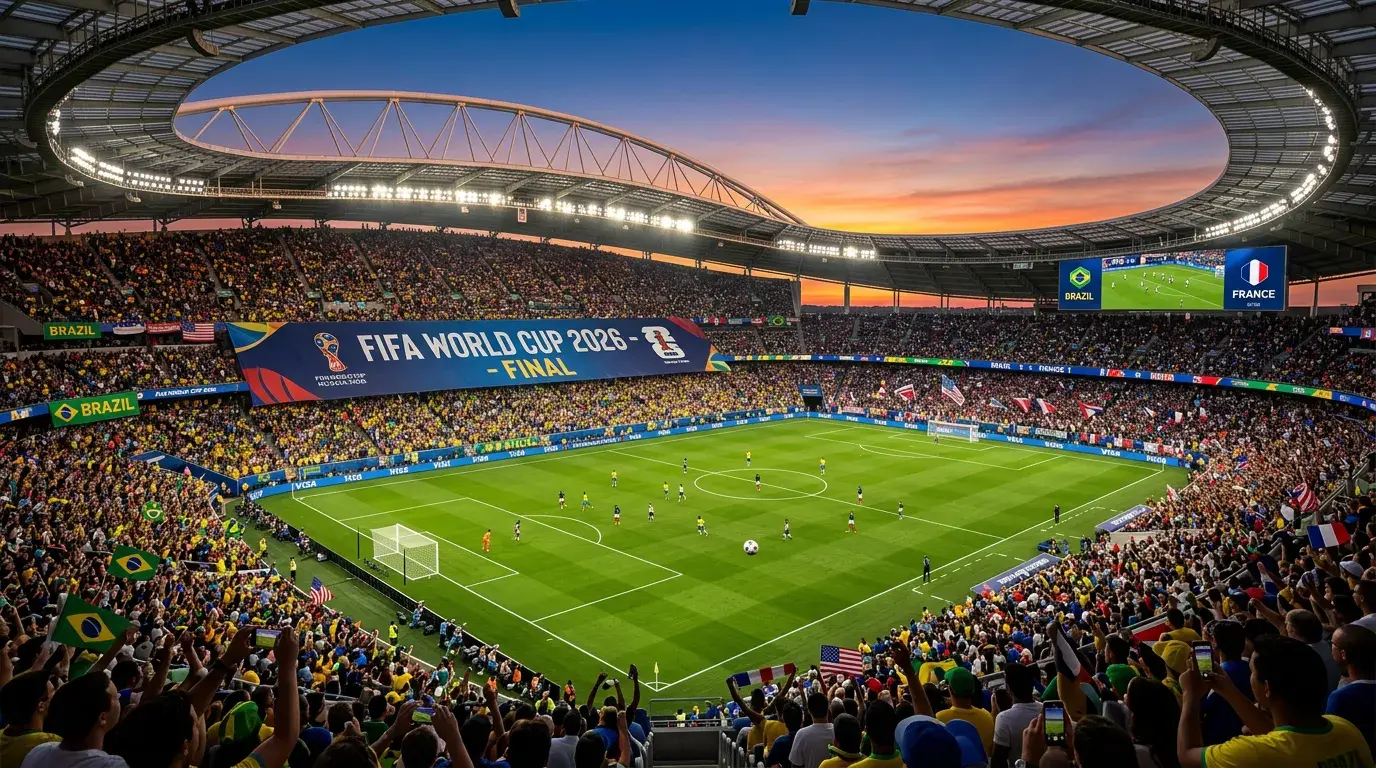
Key Takeaways for World Cup 2026 Betting
- The expanded 48-team format across 12 groups creates 104 matches over 39 days, with the top two plus eight best third-placed teams advancing — more qualification paths mean more betting angles.
- Australia's Group D fixtures against Turkey, USA, and Paraguay all fall at punter-friendly AEST times between 05:00 and 14:00, making live betting feasible for early risers.
- Outright markets currently favour Brazil, Argentina, and France, but historical data shows World Cup value often sits with second-tier European sides trading between 15.00 and 25.00.
- Licensed Australian bookmakers offer decimal odds and full tournament coverage — in-play betting remains restricted to phone-only under current legislation.
Whether you're planning
I still remember watching Tim Cahill's header against Japan in 2006 from a pub in Sydney at some ungodly hour of the morning. Twenty years later, I've covered five World Cups as a betting analyst, and I can tell you this: the 2026 edition will rewrite everything we know about tournament punting. Forty-eight teams. One hundred and four matches. Three host nations spanning four time zones. For Australian punters, this is both the greatest opportunity and the most complex betting landscape in World Cup history.
The FIFA World Cup 2026 runs from 11 June to 19 July across the United States, Mexico, and Canada. For the first time, the tournament expands beyond 32 teams, meaning more matches, more markets, and more value hiding in plain sight for those who do their homework. The Socceroos have landed in Group D alongside the United States, Paraguay, and Turkey — a draw that's challenging but far from catastrophic. With the new format allowing the top two from each group plus the eight best third-placed teams to advance, Australia's path to the knockout rounds is realistic rather than hopeful.
This guide exists because World Cup 2026 betting demands a different approach. The expanded field includes teams with limited tournament history, making historical data less reliable. The North American summer schedule means kick-off times scattered across AEST mornings and midday slots — perfect for watching with your coffee, terrible for in-play punting if you're not prepared. And the sheer volume of matches creates opportunities in smaller markets that bookmakers simply cannot price with the same accuracy as a Premier League fixture.
I've built this resource specifically for Australian punters navigating the 2026 tournament. You'll find current odds from licensed operators, squad analysis for all 48 teams, group-by-group breakdowns, and a deep dive into the Socceroos' chances under Tony Popovic. Every market available to Australian bookmakers is covered, from outright winner to Asian handicaps on individual group matches. The goal is straightforward: give you the information density you need to make sharp World Cup bets without wading through padding or promotional fluff.
Whether you're planning a long-term ante-post position on Brazil or waiting for live markets to open on Australia's group opener against Turkey, this guide is your starting point. Let's get into it.
Before diving into markets and odds, you need to understand exactly what makes this tournament structurally different from every World Cup that came before it.
Tournament Format: 48 Teams, 104 Matches

When FIFA announced the expansion in 2017, I thought it would dilute the tournament. Nine years later, I've done the maths, and the reality is more nuanced. Yes, weaker teams enter the field. But the structural changes create betting dynamics that didn't exist in smaller World Cups — dynamics that favour punters who understand the new pathways.
The 2026 World Cup divides 48 teams into 12 groups of four. Each team plays three group matches, exactly as before. The difference lies in qualification: the top two from each group advance directly to the Round of 32, and the eight best third-placed teams join them. That's 32 teams progressing from a 48-team field, or 66.7% of participants. Compare that to 50% in the 32-team format (16 from 32) and you understand why the group stage becomes a different proposition entirely.
Tournament Structure at a Glance
Groups: 12 (Groups A through L) with 4 teams each. Group stage matches: 48 matches. Knockout rounds: Round of 32, Round of 16, Quarter-finals, Semi-finals, Third-place playoff, Final. Total knockout matches: 56. Total tournament matches: 104 across 39 days.
For punters, the third-place pathway changes everything about how you evaluate group stage markets. A team sitting third with four points has realistic knockout hopes — their fate depends on results across multiple groups. This creates hedging opportunities and mid-tournament value that simply didn't exist when third place meant elimination. If you're backing a mid-tier nation to reach the knockouts, you're no longer betting against the group leaders alone; you're betting against a much lower bar.
The expanded knockout bracket also matters. A Round of 32 exists for the first time, adding an extra elimination stage before the Round of 16. This increases the number of knockout matches by 16 compared to 2022, which translates directly into more betting opportunities on match outcomes, correct scores, and player props. From a pure volume standpoint, World Cup 2026 offers nearly double the wagering surface area of a standard tournament.
The group compositions themselves show FIFA's hand. Pot 1 contained the three host nations plus eight top-ranked sides. Pots 2-4 distributed the remaining teams by FIFA ranking and confederation. The result is groups ranging from competitive (Group L with England, Croatia, Ghana, and Panama) to lopsided (Group E with Germany facing Curaçao, Ivory Coast, and Ecuador). Identifying which groups fall into which category is essential before you place a single bet on group winners or qualification markets. For a complete breakdown of all teams, see our 48 teams analysis.
The 48-team format isn't just bigger — it fundamentally alters qualification probability. Third-placed teams with four or more points have strong knockout chances, making group stage betting less binary and more forgiving than any previous World Cup.
The expanded format spreads across three countries and sixteen stadiums. Understanding the geographical split tells you which teams carry true home advantage.
Host Nations: USA, Mexico & Canada

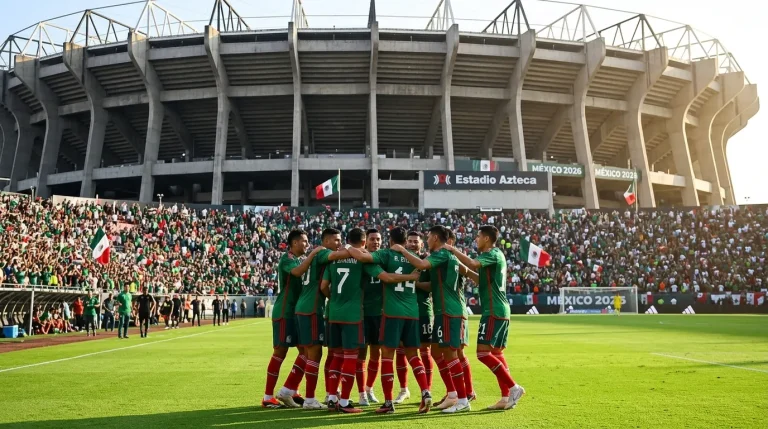
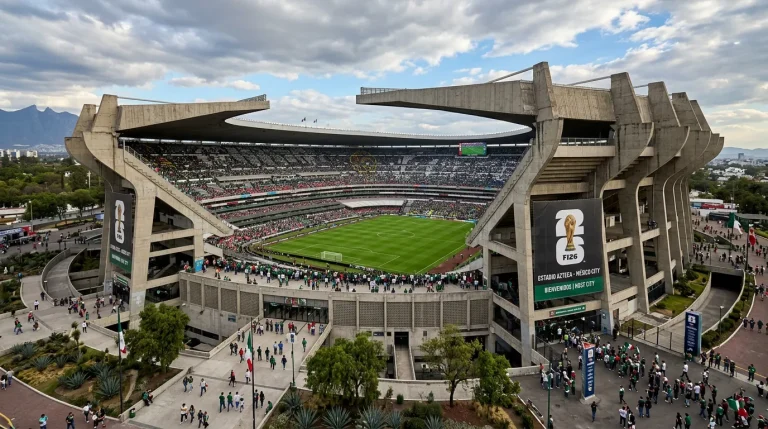
Three host nations sounds like a marketing gimmick until you look at the stadium allocation. The United States hosts 78 of 104 matches across eleven venues, including every knockout game from the quarter-finals onward. Mexico gets 13 matches across three stadiums, including the opening ceremony at the iconic Estadio Azteca. Canada receives the remaining 13 matches at two venues. This isn't a tri-nation tournament in any meaningful sense — it's a US World Cup with Mexican and Canadian garnish.
For betting purposes, the USA's overwhelming home-field presence matters enormously. The USMNT will play every group match on home soil, with fixtures in Seattle and Santa Clara. Mexico opens at the Azteca and plays its group matches domestically. Canada hosts group games in Toronto and Vancouver. All three nations receive the crowd advantage, scheduling convenience, and psychological comfort that comes with sleeping in their own beds between matches.
Historical data supports treating host nation status seriously. Since 1998, hosts have reached at least the quarter-finals in five of seven tournaments (France 1998, South Korea/Japan 2002, Germany 2006, South Africa 2010, Brazil 2014, Russia 2018, Qatar 2022 — only South Africa and Qatar failed to reach the quarters). The USA enters ranked 14th by FIFA and carries genuine knockout-stage quality regardless of venue. Mexico's depth has declined since its golden generation, but home atmosphere at the Azteca could propel them past expected performance. Canada remains the wild card — limited World Cup history, but their 2022 qualification and strong North American results suggest they won't be pushovers.
The geographical spread also affects travel and rest schedules. Teams playing early round matches in Vancouver (Pacific time) then flying to Miami (Eastern time) for knockouts face a three-hour time zone shift plus a cross-continent flight. The draw has attempted to cluster team schedules regionally, but imbalances remain. Australia, for instance, plays in Vancouver, Seattle, and Santa Clara — all West Coast venues minimising internal travel.
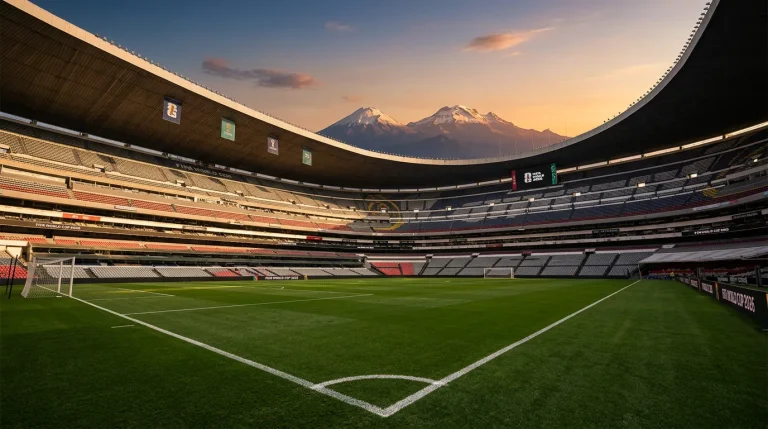
Estadio Azteca becomes the first stadium to host three World Cup finals tournaments (1970, 1986, 2026) and the only venue to have staged two World Cup Final matches. Its opening ceremony fixture — Mexico vs South Africa — carries significant historical weight.
Key Dates & Schedule
Your calendar for June and July 2026 is about to get complicated. The tournament spans 39 days across three time zones, and if you're in Australia, most matches land in morning or early afternoon slots — which is actually brilliant for watching with breakfast and punting before work.
The action begins on 11 June 2026 when Mexico faces South Africa at Estadio Azteca in Mexico City. That's 12 June at 09:00 AEST for Australian viewers, a civilised Thursday morning kick-off. The group stage runs through 28 June, delivering 48 matches across 18 days. With multiple games daily, you'll have morning, midday, and early afternoon options throughout this phase.
| Phase | Dates | Matches | AEST Timing |
|---|---|---|---|
| Opening Match | 11 June (12 June AEST) | 1 | 09:00 AEST |
| Group Stage | 11–28 June | 48 | 05:00–14:00 AEST typical |
| Round of 32 | 29 June – 2 July | 16 | Morning/midday AEST |
| Round of 16 | 3–6 July | 8 | Morning/midday AEST |
| Quarter-finals | 9–10 July | 4 | Morning AEST |
| Semi-finals | 14–15 July | 2 | Morning AEST |
| Third Place | 18 July | 1 | Morning AEST |
| Final | 19 July (20 July AEST) | 1 | 07:00 AEST |
The Final takes place at MetLife Stadium in East Rutherford, New Jersey, on 19 July local time — that's 20 July at 07:00 AEST, a Sunday morning wake-up for Australian fans. It's an early start, but far more accessible than the 2022 Qatar Final which kicked off at 03:00 AEST. For once, the time zones work in our favour.
Key dates for Socceroos supporters sit within the first two weeks: 13 June (Australia vs Turkey), 20 June (USA vs Australia), and 26 June (Paraguay vs Australia). All three occur at AEST times between 05:00 and 14:00, meaning you can watch live without destroying your sleep schedule. The USA fixture at 05:00 AEST on a Saturday is the only one requiring an alarm clock.
Betting Markets Overview
Walk into any TAB in Australia and ask for World Cup markets — the staff will hand you a sheet longer than your arm. The tournament's scale creates a dizzying array of betting options, from simple match results to exotic props on which player scores the tournament's first own goal. Understanding which markets suit your style and bankroll is the first step toward profitable World Cup punting.
Licensed Australian bookmakers structure World Cup betting into four broad categories: outright markets, group stage markets, match betting, and player propositions. Each category carries different timing, liquidity, and value characteristics. Outright markets open months before kick-off and see the heaviest ante-post action; match betting dominates once fixtures begin. Player props often hide the sharpest edges because bookmakers lack the resources to price 48 squads with equal accuracy.
Outright Markets
The flagship market is Tournament Winner — who lifts the trophy on 19 July. Prices here move slowly but meaningfully; a key injury or poor warm-up form can shift a favourite from 4.00 to 6.00 overnight. Related outright markets include Winning Continent (South America vs Europe typically dominates), Winning Region (for more granular confederation breakdowns), and To Reach the Final. Top Goalscorer (Golden Boot) attracts significant attention but carries brutal variance — a single hat-trick can vault an outsider past pre-tournament favourites.
Group Stage Markets
Each of the 12 groups generates its own betting ecosystem. Group Winner markets ask you to pick the team finishing top of their pool. To Qualify covers any team reaching the knockouts, including via the third-place pathway. Group Points Totals let you bet over/under on a team's accumulated points. Group Stage Elimination offers yes/no propositions on whether a specific side fails to advance. These markets crystallise value assessments of each group's competitiveness and individual team strength.
Match Betting
The 104 individual fixtures support standard football markets: Match Result (1X2), Asian Handicap, Over/Under Goals, Both Teams to Score, Correct Score, Halftime/Fulltime, and a range of derivative props. Match betting is where volume lives — the majority of World Cup wagering occurs here, not on outrights. For punters seeking consistent activity rather than long-term positions, match betting is your primary arena.
Player Propositions
Anytime Goalscorer, First Goalscorer, Player Assists, Player Cards, and tournament-long player props (Golden Boot, Golden Ball) round out the menu. The value in player props often sits with lesser-known attackers from mid-tier nations whose odds don't reflect their expected minutes or tactical role. I cover specific market strategies in the complete betting guide, but the short version is this: player props reward research more than any other category because bookmakers simply cannot scout 48 squads to equal depth.
Australian Market Availability
All major Australian bookmakers offer full World Cup coverage across these categories. Remember that online in-play betting remains prohibited under the Interactive Gambling Act — live wagers must be placed by phone or in-person. Pre-match markets have no such restriction. Learn more about all available betting markets.
Quarter lines (e.g. −0.75) split your stake across the two nearest lines, which is why you can win or lose only half. Enter the backed team's final goal margin to see exactly how the bet settles.
Implied probability is what the odds assume. If your own estimate is higher, you've found value. This site's angle: historical World Cup value sits in the 12.00–20.00 outright range.
Every leg must win for a multi to pay. Combining short-priced Group D favourites builds a bigger price — but stacks the bookmaker margin with each added leg.
Outright Winner Odds





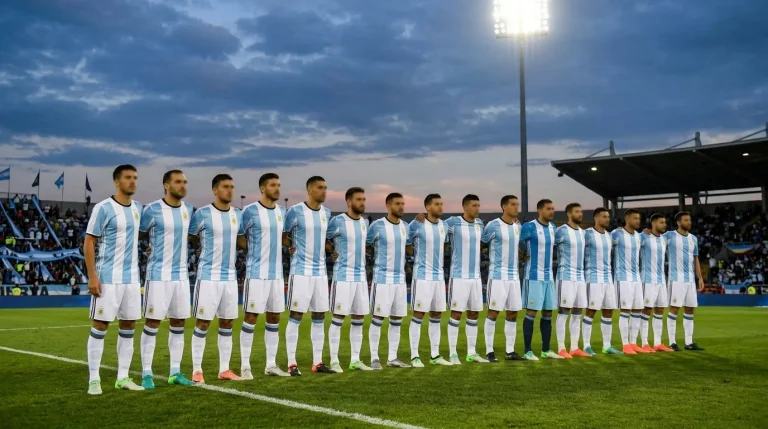

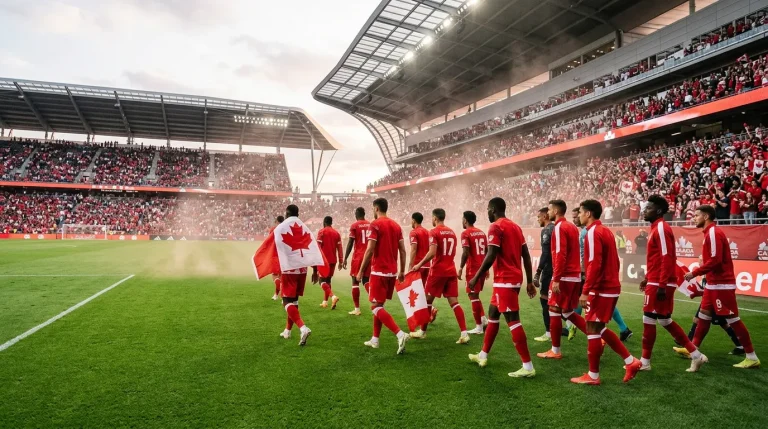

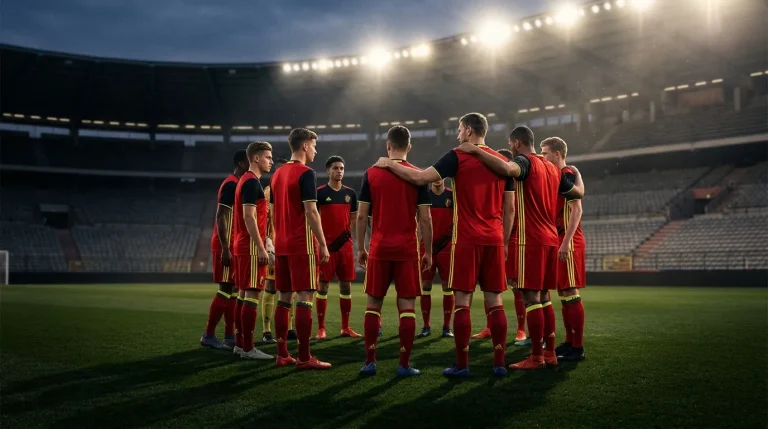
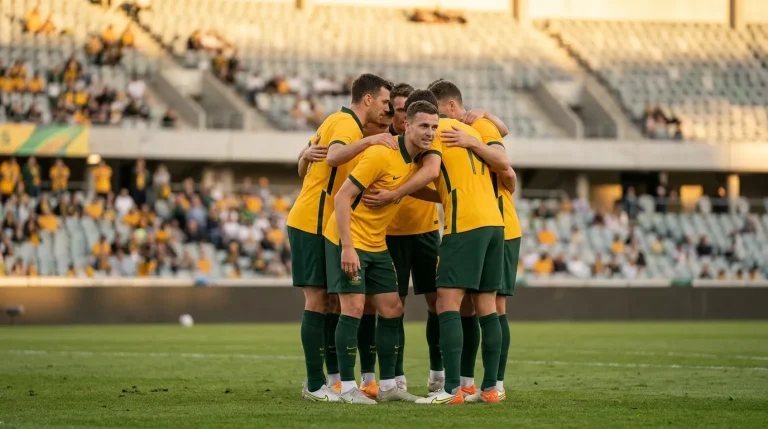
Brazil opens as favourite, and anyone surprised hasn't watched a World Cup in the past three decades. The Selecão carry the weight of five titles, the deepest attacking pool in international football, and the perpetual pressure of an entire nation expecting nothing less than glory. But favouritism is one thing; value is another. At current prices, I see three tiers worth examining.
The elite tier — Brazil, Argentina, France — trades at compressed odds reflecting genuine title probability. Argentina enters as defending champions with Lionel Scaloni's system still intact and the question of Lionel Messi's involvement adding narrative intrigue. France reached consecutive finals (2018 champion, 2022 runner-up) and boasts Kylian Mbappé at his peak. These three sides have shorter odds for good reason; they're the most likely winners. But favourites rarely offer value at posted prices.
Current Outright Odds — Top 10
| Team | Odds | Implied Probability |
|---|---|---|
| Brazil | 5.50 | 18.2% |
| Argentina | 6.00 | 16.7% |
| France | 7.00 | 14.3% |
| England | 9.00 | 11.1% |
| Germany | 12.00 | 8.3% |
| Spain | 13.00 | 7.7% |
| Portugal | 15.00 | 6.7% |
| Netherlands | 17.00 | 5.9% |
| Belgium | 21.00 | 4.8% |
| USA | 25.00 | 4.0% |
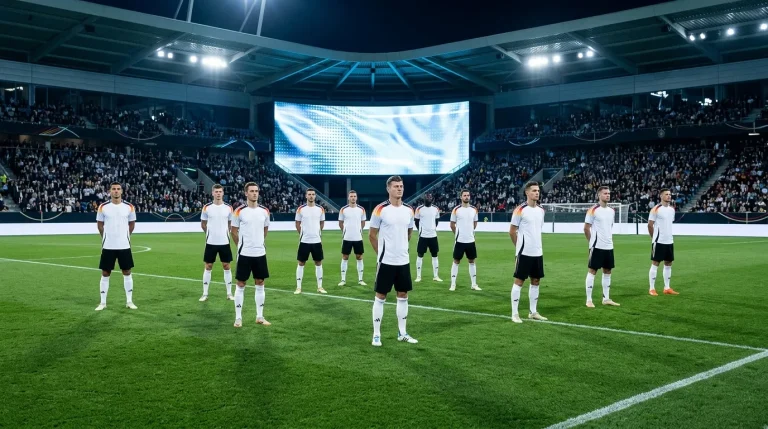
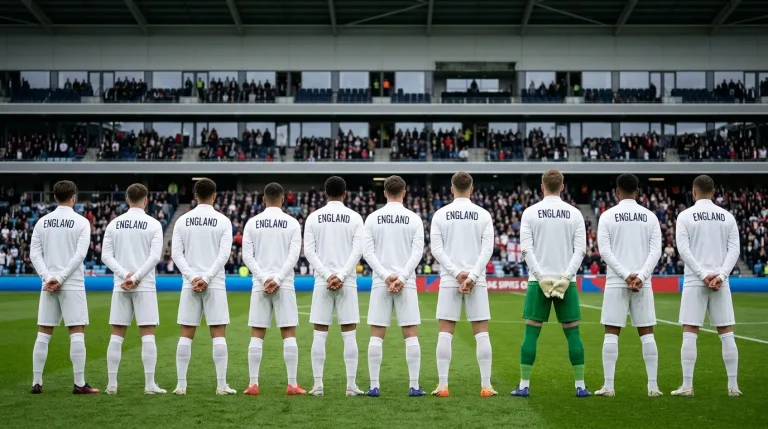
The value tier sits between odds of 10.00 and 20.00. England has underperformed at tournaments for decades but carries genuine squad quality; their price accounts for historical bottling rather than current personnel. Germany rebuilds after Euro 2024 disappointment, and tournament experience could see them peak at the right moment. Spain's golden generation 2.0 combines youth and system play — their group looks manageable through to the quarter-finals. These sides offer better return-to-risk ratios than the big three, assuming you believe in their ceiling.
The longshot tier includes the host nations and dark horses. The USA at 25.00 reflects home advantage and a talented but inexperienced squad; there's a scenario where the bracket falls kindly and they make a semi-final. For Socceroos backers, Australia's outright odds sit around 501.00 (implied probability under 0.2%) — it's a romantic punt rather than a serious investment. For detailed outright winner odds analysis, including historical data on similar price ranges, I break down each tier more thoroughly.
The outright market compresses true probability at the top and underestimates mid-tier European sides. Historical value has consistently appeared in the 12.00–20.00 range rather than with pre-tournament favourites or extreme longshots.
Socceroos at World Cup 2026

Let me be direct: Australia is not winning this World Cup. The odds of 501.00 are not mispriced. But that's not why most Australian punters care about the Socceroos — we care about the group stage, the knockout pathway, and whether Tony Popovic's squad can replicate or exceed the 2022 run that reached the Round of 16. On those terms, the betting picture looks considerably more interesting.
Group D presents a genuine challenge without being a death sentence. The United States enters as hosts and FIFA-ranked 14th, carrying a squad featuring Christian Pulisic, Weston McKennie, and a supporting cast with European club experience. Paraguay qualified through CONMEBOL and sits 39th in the rankings — competitive but beatable. Turkey, ranked 25th, represents the darkest horse in the group with their blend of attacking quality and defensive vulnerabilities. Australia's FIFA ranking of 26th places them squarely in the middle tier of this draw, neither outclassed nor favoured.
Australia Group D Fixtures
| Date | Time (AEST) | Match | Venue |
|---|---|---|---|
| 13 June (Sat) | 14:00 | Australia vs Turkey | BC Place, Vancouver |
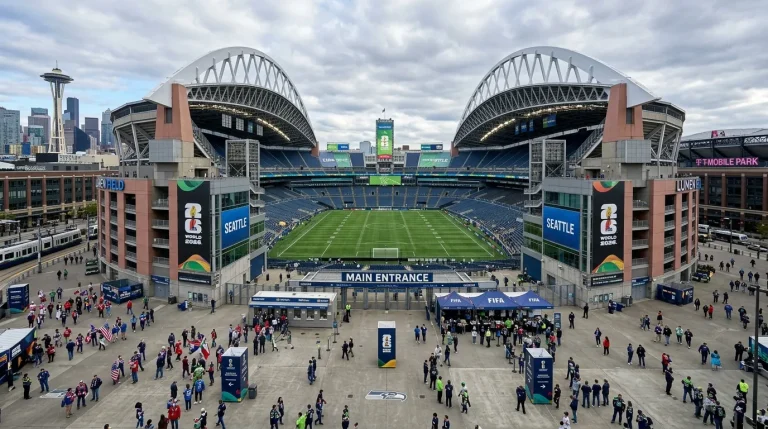
| 20 June (Sat) | 05:00 | USA vs Australia | Lumen Field, Seattle |
| 26 June (Fri) | 12:00 | Paraguay vs Australia | Levi's Stadium, Santa Clara |
The opening fixture against Turkey offers the most direct path to points. Historically, European sides struggle in North American conditions during their summer months, and Turkey's inconsistent form over the past cycle suggests they're vulnerable to well-organised opponents. A win here puts Australia in pole position for knockout qualification, regardless of results against the USA. The Turkey match is the one I'll be backing with real money.
The USA clash is a different proposition. Playing the host nation on their home soil, with a partisan Seattle crowd at Lumen Field, means Australia enters as clear underdogs. A draw would be an excellent result; a win would be a statement. The match kicks off at 05:00 AEST on a Saturday, which is brutal for live viewing but leaves the entire weekend to recover emotionally if things go wrong.
Paraguay in the final group match could become a dead rubber, a winner-takes-all decider, or anything in between depending on prior results. The unpredictability here limits pre-tournament betting appeal, but watch the markets closely once group dynamics crystallise.
Squad Assessment
Tony Popovic took charge in late 2024 with a mandate to rebuild after Graham Arnold's departure. The squad blend includes established veterans (Mat Ryan in goal, Aziz Behich in defence) alongside emerging talents like Nestory Irankunda, whose Bundesliga move to Bayern Munich injected genuine star quality into the attack. Jordy Bos, Alessandro Circati, and Cameron Peupion represent the next generation, though their World Cup readiness remains unproven.
The system under Popovic emphasises defensive structure and quick transitions — a pragmatic approach suited to tournament football where single mistakes decide matches. Australia's 2022 success came from similar pragmatism; expecting expansive football would misunderstand what this squad does well.
Betting Markets for Socceroos
To Qualify from Group D prices Australia around 2.10–2.30 depending on bookmaker — essentially a coin flip with slight juice toward elimination. That feels about right. The new format's third-place pathway helps; four points should be enough for knockout qualification in most scenarios. For more detailed analysis of squad composition, tactical setup, and specific match odds, see the Socceroos World Cup 2026 dedicated page. You can also explore all Group D fixtures and predictions.
Australia's only World Cup knockout victory came against Uzbekistan in 2015 — at the Asian Cup, not the World Cup. The Socceroos have never won a World Cup knockout match, making any 2026 advancement beyond the Round of 32 historically significant.
Groups at a Glance

Twelve groups. Forty-eight teams. Somewhere in this matrix sits value, and finding it requires systematic evaluation rather than gut instinct. I've ranked the groups by competitive balance and betting interest, but the summary version is this: Groups C, L, and H offer the most drama; Groups E and A look most predictable.
| Group | Teams | Assessment |
|---|---|---|
| A | Mexico, South Korea, South Africa, Czechia | Mexico overwhelming favourites at home. South Korea distant second. |
| B | Canada, Switzerland, Qatar, Bosnia | Canada with home advantage. Switzerland should qualify. Qatar fading. |
| C | Brazil, Morocco, Scotland, Haiti | Brazil dominant. Morocco and Scotland fighting for second — genuine tension. |
| D | USA, Paraguay, Australia, Turkey | Socceroos' group. Four-way competitive; no guaranteed qualifiers. |
| E | Germany, Curaçao, Ivory Coast, Ecuador | Germany cruises. Ivory Coast vs Ecuador for second — Curaçao outclassed. |
| F | Netherlands, Japan, Tunisia, Sweden | Netherlands ahead. Japan dangerous. Tunisia and Sweden battling for third. |
| G | Belgium, Egypt, Iran, New Zealand | Belgium's golden generation final shot. Egypt improving. NZ longshot. |
| H | Spain, Cape Verde, Saudi Arabia, Uruguay | Spain and Uruguay should dominate. Saudi's 2022 magic unlikely to repeat. |
| I | France, Senegal, Norway, Iraq | France clears. Senegal and Norway competitive for second. Iraq struggles. |
| J | Argentina, Algeria, Austria, Jordan | Argentina rolls. Algeria and Austria for second — value in Algeria. |
| K | Portugal, Uzbekistan, Colombia, DR Congo | Portugal and Colombia should qualify. Uzbekistan dark horse for third. |
| L | England, Croatia, Ghana, Panama | Genuine group of death. England favoured, Croatia aging but dangerous. |






Group L stands out as the tournament's most competitive draw. England enters as second-favourite to win the entire tournament but faces Croatia — a 2018 finalist and 2022 semi-finalist with Luka Modrić potentially playing his final World Cup — plus Ghana, who eliminated them from 2006 in a penalty shootout. Panama rounds out the group as a capable CONCACAF side. No team here is safe; all four could realistically finish in any position.
Group D — Australia's group — rates highly for competitive balance if not for outright quality. The USA carries host-nation pressure and a young squad prone to inconsistency. Paraguay has struggled to rebuild after their golden generation retired. Turkey swings between brilliant and shambolic. Australia fits this volatility perfectly. My assessment gives each team between 15-35% chance of finishing top, which translates to better value on group winner markets than more stratified groups.
For punters seeking underdog value, Group J deserves attention. Argentina will win the group; that much is certain. But Algeria sits third in African rankings and has grown since their disappointing 2022 AFCON campaign. At current prices around 6.00 to qualify, Algeria offers a viable upset pathway against Austria and Jordan. Similar dynamics exist in Group K, where Uzbekistan and DR Congo aren't taken seriously but possess squad quality underestimated by European-focused markets.
Full breakdowns for each group — including qualification odds, head-to-head records, and match-by-match previews — are available in the comprehensive groups analysis.
Stadiums & Venues

Sixteen stadiums across three countries, but the betting relevance narrows quickly when you focus on conditions. Most World Cup venues are modern, climate-controlled NFL or MLS facilities with artificial or hybrid turf. The outliers — particularly the Mexican venues and altitude concerns — are where surface and environment actually influence match outcomes.
MetLife Stadium in East Rutherford, New Jersey, hosts the Final on 19 July. The venue seats over 82,000 for football configuration and represents FIFA's showpiece selection. Eight matches including both semi-finals lead into the Final, meaning any team reaching the business end of the tournament will face this stadium multiple times. The playing surface is synthetic turf, which has drawn criticism from European clubs but offers consistent conditions regardless of weather.
| Country | Venues | Matches | Key Fixtures |
|---|---|---|---|
| USA | 11 | 78 | All knockout matches from QF onwards; Final at MetLife |
| Mexico | 3 | 13 | Opening match at Estadio Azteca (2,240m altitude) |
| Canada | 2 | 13 | Australia vs Turkey at BC Place, Vancouver |
Estadio Azteca in Mexico City presents the most significant environmental variable. At 2,240 metres above sea level, the venue imposes altitude challenges on unacclimatised teams — reduced oxygen levels affect stamina, ball flight, and tactical pacing. European and Asian sides scheduled for Azteca group matches face genuine disadvantage against teams accustomed to altitude. For betting purposes, home advantage amplifies at the Azteca; back Mexico heavily when they play there.
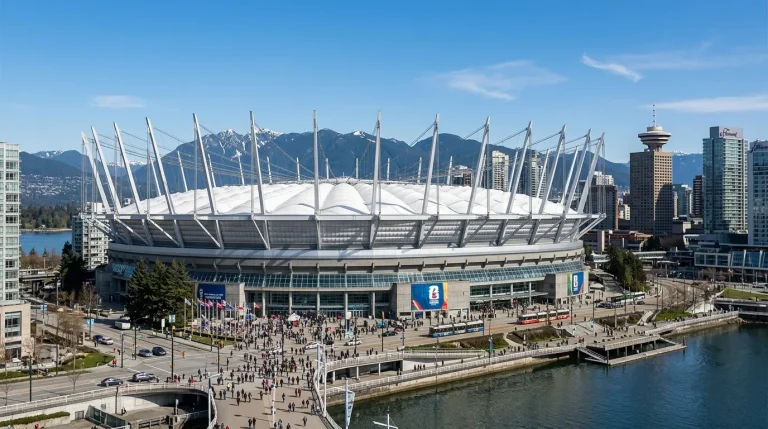
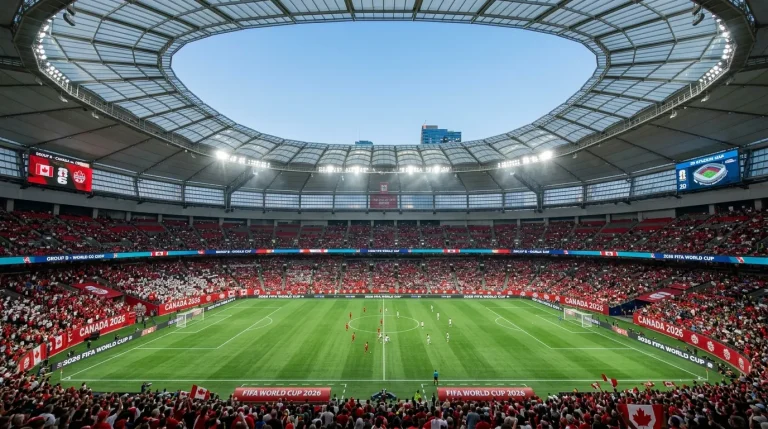
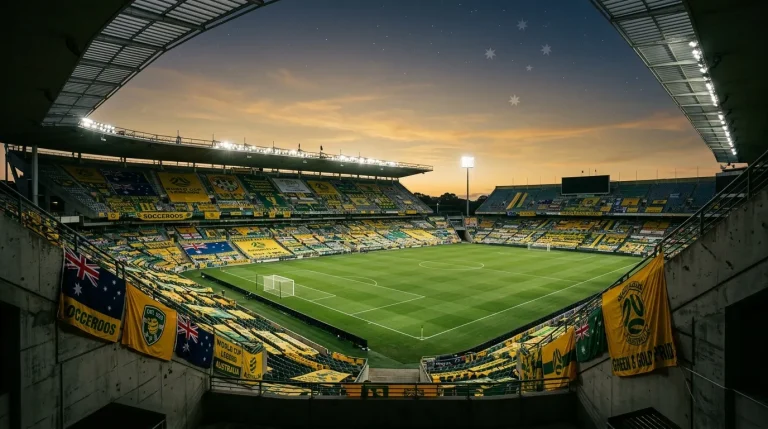
The Canadian venues — BC Place in Vancouver and BMO Field in Toronto — use artificial surfaces that advantage technically skilled sides comfortable with predictable ball roll. Australia plays their opening match against Turkey at BC Place, a venue with a retractable roof that ensures weather plays no role. Vancouver's timezone (Pacific) means later afternoon kick-offs translate to manageable AEST morning times.
For Socceroos fixtures specifically: BC Place (Vancouver), Lumen Field (Seattle), and Levi's Stadium (Santa Clara) all sit on the US West Coast with similar conditions. Travel fatigue is minimised compared to teams criss-crossing the continent. This clustering isn't an accident — FIFA scheduled regional fixtures to reduce logistical burden. From a betting angle, it removes one potential excuse for Australian underperformance.
How to Bet on World Cup 2026 in Australia

My first World Cup bet was placed through a TAB terminal in 2006, wagering on Australia to beat Japan in the group stage. The Socceroos won 3-1 after trailing at halftime, and I've been hooked on tournament betting ever since. Twenty years later, the Australian market has matured considerably — but the legal framework remains distinctly Australian in character.
Sports betting is legal in Australia through licensed operators regulated under the Interactive Gambling Act 2001. Each state maintains additional oversight through bodies like NSW Liquor & Gaming, Victoria's VGCCC, and equivalent regulators elsewhere. The practical effect: Australian punters have access to a competitive marketplace of licensed bookmakers, all offering World Cup markets with decimal odds — the standard format you'll encounter everywhere from Sportsbet to Ladbrokes to TAB.
Account Requirements
Opening an account with any licensed Australian bookmaker requires identity verification. You'll need valid photo identification, proof of address, and to confirm you're over 18 years old. Most bookmakers complete verification within 24-48 hours, but tournament demand may slow processing closer to kick-off. My advice: open accounts well in advance if you're planning significant World Cup activity. Having multiple accounts allows odds comparison across the market — a ten-cent difference on a $100 stake adds up across 104 matches.
Deposit Methods
Standard deposit options include debit cards, bank transfers, BPAY, and POLi. Credit card deposits are prohibited under Australian law — a 2018 regulatory change designed to reduce problem gambling. Withdrawals typically process within 1-3 business days depending on your chosen method. Note that some bookmakers apply minimum withdrawal thresholds, so check terms before depositing.
In-Play Betting Restrictions
Australia prohibits online in-play betting on sports events. If you want to place a live bet during a World Cup match, you must do so by telephone or in-person at a retail venue. This restriction catches many new punters off-guard — the option simply doesn't exist in mobile apps or websites. Pre-match markets close at kick-off, and that's your final opportunity for online wagering on that fixture.
Practical Steps
Open accounts with multiple licensed bookmakers. Complete verification before June 2026. Fund accounts via debit card or bank transfer. Compare odds using independent comparison tools. Place pre-match bets online; live bets by phone only. Track all wagers for bankroll management.
For first-time World Cup punters, start with simple markets — match results and outright winner — before exploring Asian handicaps or player props. The volume of available markets can overwhelm even experienced punters; discipline in market selection matters more than chasing every available edge.
Responsible Gambling
I've written about World Cup betting for nearly a decade, and in that time I've seen the damage that uncontrolled gambling causes. A six-week tournament with daily matches creates perfect conditions for losing discipline — the excitement builds, the results stack up, and before you know it you're chasing losses at 4am on a Tuesday. Let me be clear: this guide exists to improve your betting outcomes, not to encourage wagering beyond your means.
Australia has some of the strongest responsible gambling frameworks in the world, and for good reason. Approximately 73% of Australian adults gamble in some form each year, making awareness and support services essential.
Gamble Responsibly. If gambling is affecting you or someone you know, free support is available. Contact Gambling Help on 1800 858 858 or visit gamblinghelponline.org.au for 24/7 assistance.
The national self-exclusion register BetStop allows you to exclude yourself from all licensed Australian wagering operators with a single registration. The scheme became mandatory in August 2023, meaning any licensed bookmaker must check registrations before allowing account activity. If you need a break from betting — whether for the World Cup period or longer — BetStop provides enforceable protection.
Practical safeguards include setting deposit limits (most bookmakers offer daily, weekly, or monthly caps), establishing a dedicated tournament bankroll separate from regular finances, and never betting more than you can afford to lose on any single match. The World Cup will happen whether you're wagering or not. Enjoying the tournament matters more than any potential profit.
Frequently Asked Questions
How does the 48-team World Cup format change qualification compared to previous tournaments?
The expanded format significantly increases qualification pathways. Instead of 16 teams advancing from eight groups (top two per group), 32 teams now advance from 12 groups — the top two from each group plus the eight best third-placed teams. This means 66.7% of participants reach the knockout rounds compared to 50% previously. For betting purposes, a third-place finish with four points likely qualifies; previously, third place meant elimination. This reduces the binary nature of group stage betting and creates value in "to qualify" markets for teams in competitive groups.
What times will World Cup 2026 matches kick off in Australian Eastern Standard Time?
Most World Cup 2026 matches fall between 05:00 and 14:00 AEST, making them far more accessible than recent tournaments in Qatar (early morning kick-offs) or Europe (late evening). The tournament takes place during the North American summer, which translates to Australian winter mornings and early afternoons. Group stage matches typically spread across three kick-off slots: early morning (around 05:00-07:00 AEST), mid-morning (09:00-11:00 AEST), and early afternoon (13:00-15:00 AEST). The Final on 19 July kicks off at 18:00 local time in New Jersey, which is 08:00 AEST on 20 July — a Sunday morning start.
Can I place live bets on World Cup matches through Australian bookmakers online?
No. Australian law prohibits online in-play betting on sports events under the Interactive Gambling Act 2001. If you want to place a bet during a live World Cup match, you must do so by telephone or in-person at a retail betting venue. All online and mobile betting must be completed before kick-off. This is a significant restriction for those accustomed to live betting in other jurisdictions, and it means pre-match research and positioning becomes more important since you cannot adjust during the match.
What are the Socceroos' realistic chances of advancing from Group D?
Australia's qualification probability sits around 45-50% based on current bookmaker pricing. Group D contains the USA (hosts, ranked 14th), Paraguay (ranked 39th), Turkey (ranked 25th), and Australia (ranked 26th). The group is genuinely competitive without a dominant favourite, making qualification achievable with two draws and a win, or even two draws and a loss if results elsewhere cooperate. The opening match against Turkey represents the best opportunity for three points. The third-place pathway to the Round of 32 provides insurance — four points should suffice for qualification as one of the eight best third-placed teams.
Which outright markets offer the best value for World Cup 2026 betting?
Historical World Cup data suggests value sits in the 12.00 to 20.00 odds range rather than with pre-tournament favourites or extreme longshots. Teams like Germany, Spain, Portugal, and the Netherlands occupy this tier — all possess genuine winning capability without the compressed odds attached to Brazil, Argentina, and France. Additionally, related outright markets like "To Reach the Final" or "To Reach Semi-Finals" offer better value propositions than Tournament Winner because they reduce variance. A team needs to win six knockout matches to claim the trophy; a team only needs four wins to reach the Final.
What decimal odds format do Australian bookmakers use for World Cup betting?
Australian bookmakers universally use decimal odds, which show your total return per dollar wagered including your stake. For example, odds of 3.50 mean a $10 bet returns $35 total ($25 profit plus $10 stake). This differs from fractional odds common in the UK or American moneyline odds. Decimal odds simplify comparison across bookmakers and calculating potential returns — multiply your stake by the odds for your total return. All World Cup markets from licensed Australian operators display decimal format by default.
When is the best time to place outright World Cup bets for maximum value?
Ante-post betting typically offers the best odds for outright markets, but timing depends on your target. For clear favourites like Brazil or Argentina, prices tend to shorten as the tournament approaches — early betting captures better value. For longer shots or teams whose squads are unsettled, waiting until final rosters are announced (typically late May) provides clarity that often moves odds in unpredictable directions. Injury news, warm-up match performances, and public money all influence prices in the weeks before kick-off. I generally take positions on favourites 3-6 months early and wait until late May for value picks in the 15.00-30.00 range.
